top of page
  • Aug 16, 2025

JUNE-AUGUST 2024

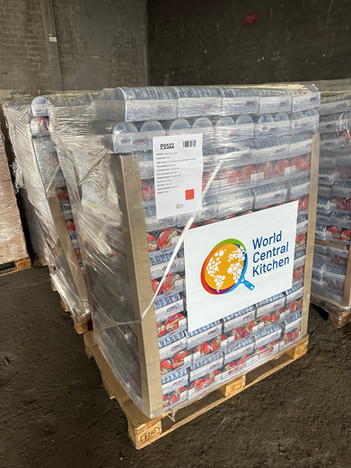
I returned to Cyprus. The goal was to move the pallets to Gaza that we had placed in storage in Larnaca and Limassol after the April 1 attack. I thought this would take about two weeks—simply sending the pallets on standard freight to Israel and then into Gaza. I was wrong. I ended up staying in Cyprus for nearly two months.


By the time I returned, the situation had changed. The U.S. Army had begun operating a floating pier in Gaza, working out of the same Cypriot port we had been using. The effort was operating under a new framework called 2720: a United Nations–Cyprus humanitarian corridor intended to funnel aid into Gaza. Any shipments now fell under this umbrella. There were strong incentives to join rather than operate independently, but the system was new and untested.


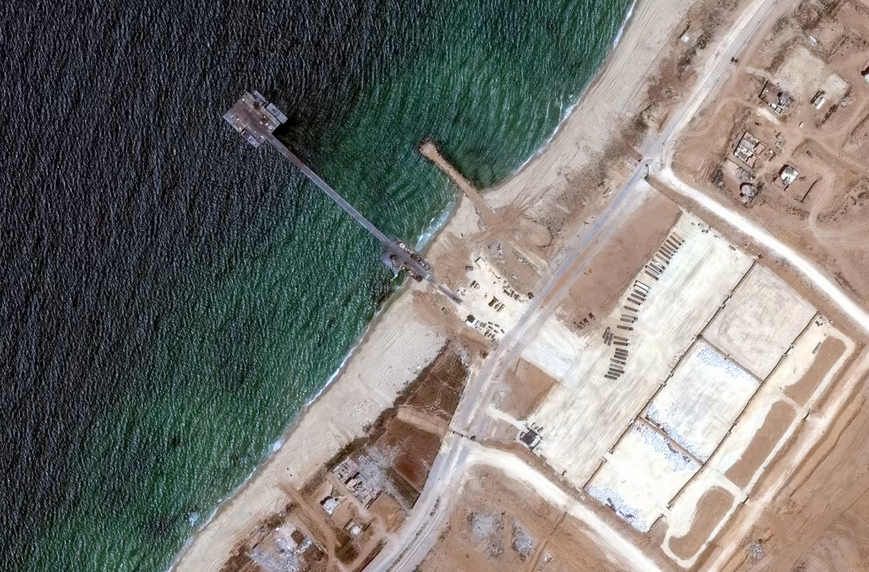
The Army’s pier was not working as planned. It had been designed for calm water, and the Mediterranean is not calm. Deliveries stalled, product backed up, and large “floating warehouses” sat offshore holding aid that could not be landed. What was meant to be a breakthrough became a bottleneck. In aerial images (below), you can see their pier next to our old jetty.


This left me with a choice. I could manage everything myself, using private freight, but the costs and complexity would fall entirely on me. Or I could join the UN–U.S. Army operation: register our aid in Cyprus, deliver it to the port, and let the Army ferry it across. The problem was clear—their system was not moving product. Ironically, it was a larger, clumsier version of what we had already done successfully.


So I suggested another path. I asked the UN and USAID—who were coordinating for the Army—whether our pallets could be loaded onto their ships but delivered directly to Ashdod in Israel, bypassing the pier. Nobody had tried this yet. It avoided the pier but created a new challenge: customs. We now had to manage both import into Israel and export out of Israel before anything could reach Gaza.


You might assume exceptions would be made in a humanitarian crisis, but bureaucracy still reigned. We needed detailed guidance from the IDF on how to prepare shipments—both physically and on paper—and the instructions we received contradicted each other. At one point, I had to organize a Zoom call simply to get two Israeli generals to agree on which documents were actually required. That call uncovered the missing piece of the process. From it, the UN established the workflow that would be used to move future aid from Cyprus through Israel into Gaza.


In effect, this was the second time we broke new ground. The first was proving that aid could move from Cyprus to Gaza at all. The second was creating the system to route it through Israel. Along the way, we built a digital platform to track 2,500 pallets across a chain that spanned warehouses, ships, ports, trucks, borders, and, finally, recipients inside Gaza.


Weeks later, after countless delays and negotiations, I received photos from inside Gaza. The same pallets we had wrapped and labeled in Cyprus were now stacked on trucks and in warehouses in Gaza. Seeing that was one of the most rewarding moments of my life.


Looking back, my time in Cyprus—across all three phases—will be one of the most memorable experiences I will ever have. For the people we lost. For the successes we had. For the food we ate. For the knowledge I gained in areas I never expected to understand: maritime logistics, humanitarian coordination, United Nations bureaucracy. For the sheer strangeness of being someone whose job is to invent and navigate corridors of aid in the middle of a war.


I still have not fully processed the scale of what we did, or how unusual this work is. In the fullness of my life, those months will stand out as extraordinary.


  • Aug 15, 2025

OCTOBER 2024

After the intensity of Cyprus, the work stateside felt manageable by comparison. When a hurricane struck Florida, setting up a kitchen and building out a team hardly registered as a challenge. I found a warehouse, signed a lease the same day, and within 48 hours had a fully operational kitchen running. It was a kind of palate cleanser—when Home Depot and Costco are just up the road and everyone speaks English, what more could you need. The loading would flood when it rained, but that was manageable. Still, there were new lessons. I devoted real attention to iterating the dish pit. This time I built it large and sturdy enough that washing could be done from ontop rather than from the side. It was a clear improvement, but it also exposed refinements I’d carry forward into the next version. I was also able to work with a propane guy and design and build a pretty robust plumbing system for powering our massive burners which I was quite happy with and our neighbors across the street built custom shipping crates, so I had them construct some for our burners and pans as well.


WCK also made a video featuring me give a tour of the kitchen.


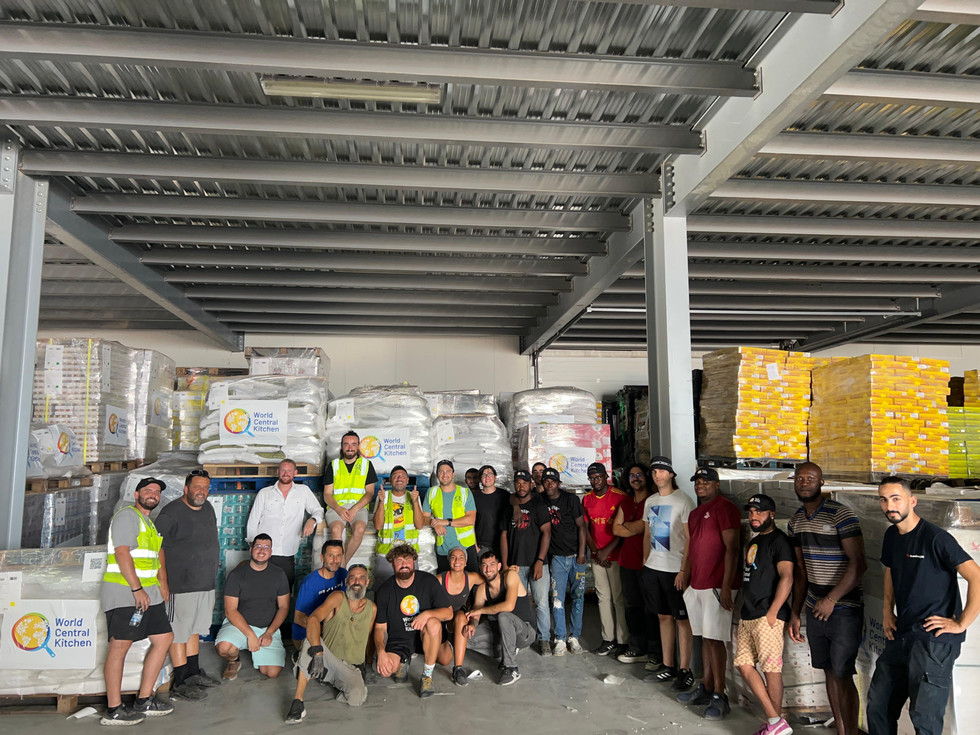
This is a good time to mention my team, because we got a good photo of most of us below. But the same group of people I bring or try to bring to all these projects, and without them doing an array of jobs, this work would not be bearable. Traveling the world together, and experiencing the things we experience together grow a special bond and I'm lucky to not only have such incredible people working for me, but to be able to do the work in general with them is awesome.


  • Aug 14, 2025

DECEMBER 2024 - MARCH 2025

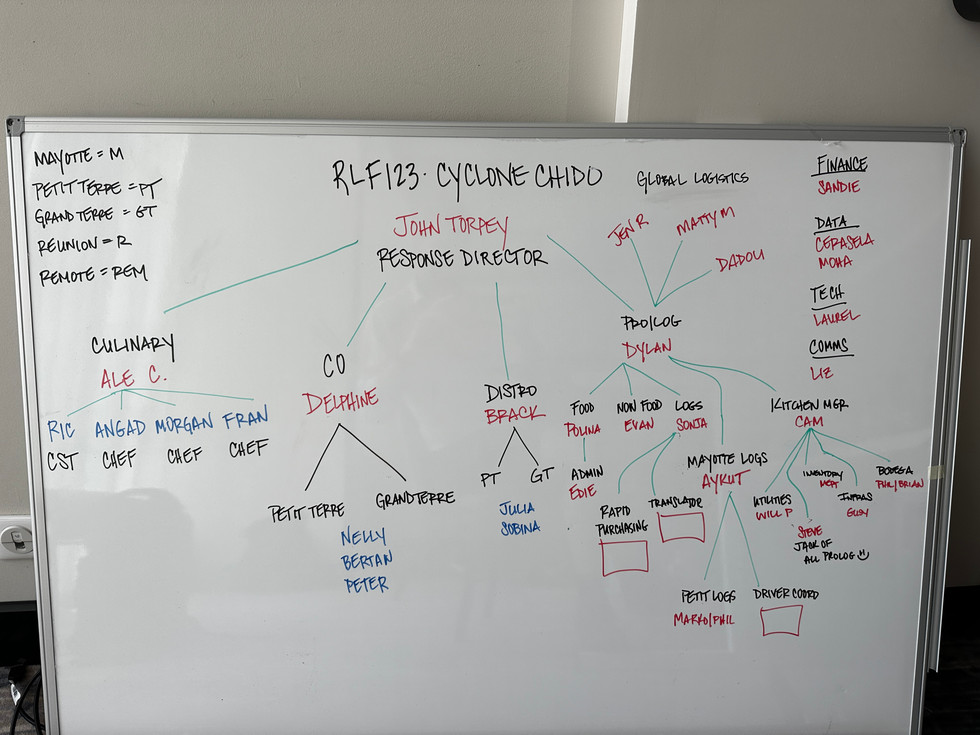
In December I learned of two French territories off Madagascar—Réunion to the east, Mayotte to the west. A cyclone had devastated Mayotte, leaving the community in ruins. The French military sealed the island, closing the airport after air traffic control was destroyed, and took command of the crisis. With no civilian access, we set up remotely on Réunion, working out of a hotel conference room.


We purchased 150,000 MREs from South Africa and air-freighted them to Réunion, forming the spine of our supply chain. From there, we leaned on the military to shuttle urgent product into Mayotte by aircraft—at that time the only planes permitted to land—while also building a sea freight pipeline. Containers of food and supplies would take two weeks at best, but they could carry far more.


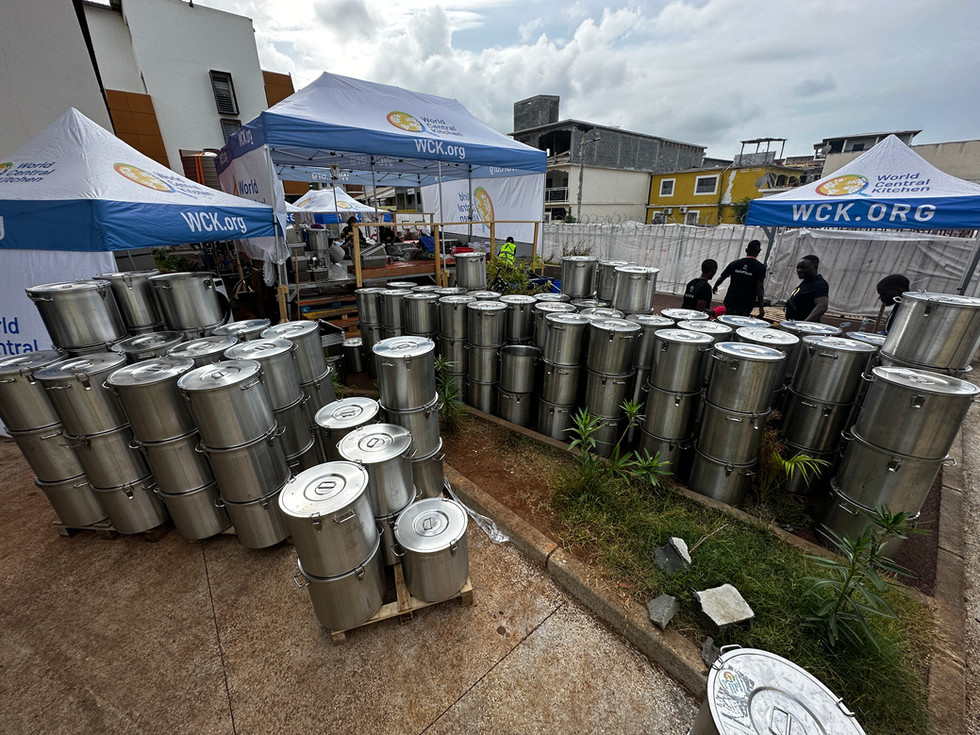
At the same time, we began sourcing everything needed to build a kitchen from scratch: burners, pots, cutting boards, knives, tables, refrigeration, generators. Orders came from Spain, France, and Turkey, some of it manufactured to spec because quantities simply didn’t exist in stock. On Mayotte, we took over a storm-damaged sports facility, turning the gymnasium into a warehouse and a neighboring community hall into the kitchen.


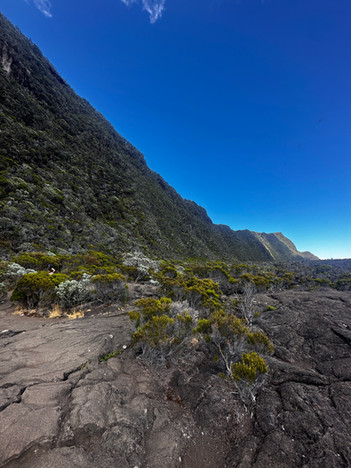
The MREs reached Réunion within two weeks, bridging the gap until cooking could begin. As head of supply chain, my priority was to keep the global network moving before relocating myself. It was more prudent to coordinate from Réunion, where infrastructure and communications worked, than from the chaos of Mayotte. That meant myself and a few of my team spent Christmas on Réunion. We marked the day with an eight-mile hike up the island’s volcano—4,000 calories burned—before settling for an Asian-fusion buffet as our holiday dinner. Soon after, we move into Mayotte.


There, we scaled operations. We chartered a ship from Nairobi that carried 20 containers of rice, flour, and water—products the island simply lacked. Protein we managed to source locally, but vegetables were scarce, so we flew in onions and canned goods by the ton. We also procured forklifts, tools, refrigerated containers, and other heavy assets on Réunion and shipped them across. It was incredibly rewarding to see the stoves and pots we ordered in Istanbul arrive to the kitchen in Mayotte, these feats feel like miracles. I always feel that sense when I'm able to land a refrigerated container and get it power as well. Our hotel on Mayotte was a modest 'resort' called The Jade, where we would cook dinner for ourselves using the outdoor kitchen.


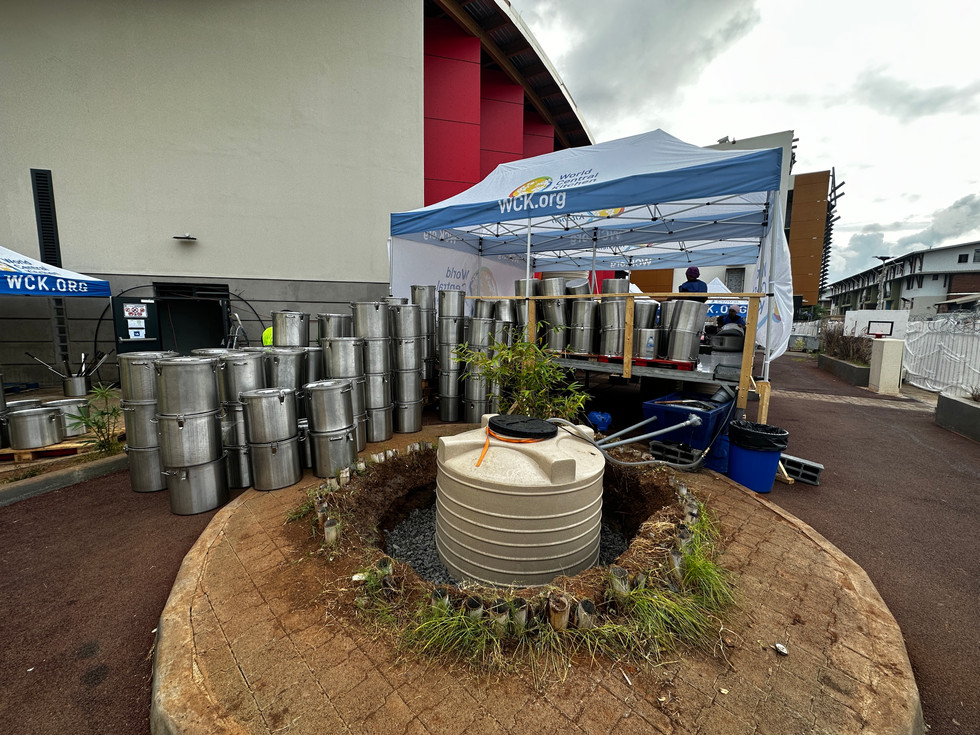
This deployment gave me another chance to refine the dish pit. I built a larger, sturdier version with a gravity-fed grease trap that solved the clogging issues we’d faced in Florida, and I experimented with filtering water for reuse—ambitious given our limited materials, but a worthwhile evolution of the system.


It took nearly a month to stand up the kitchen, far longer than the 48 hours it had taken me in Florida. But given the circumstances—an isolated island, shattered infrastructure, global sourcing of equipment that in many cases didn’t even exist when we arrived—I consider it an achievement.


©2026 Dylan dugas
bottom of page